
EICRs and landlord certificates, explained in plain English
An Electrical Installation Condition Report tells you whether a property is safe to live in and what, if anything, needs fixing. Landlords in England must have one every five years. We do the inspection, explain the codes and price any remedials separately, never pushed.
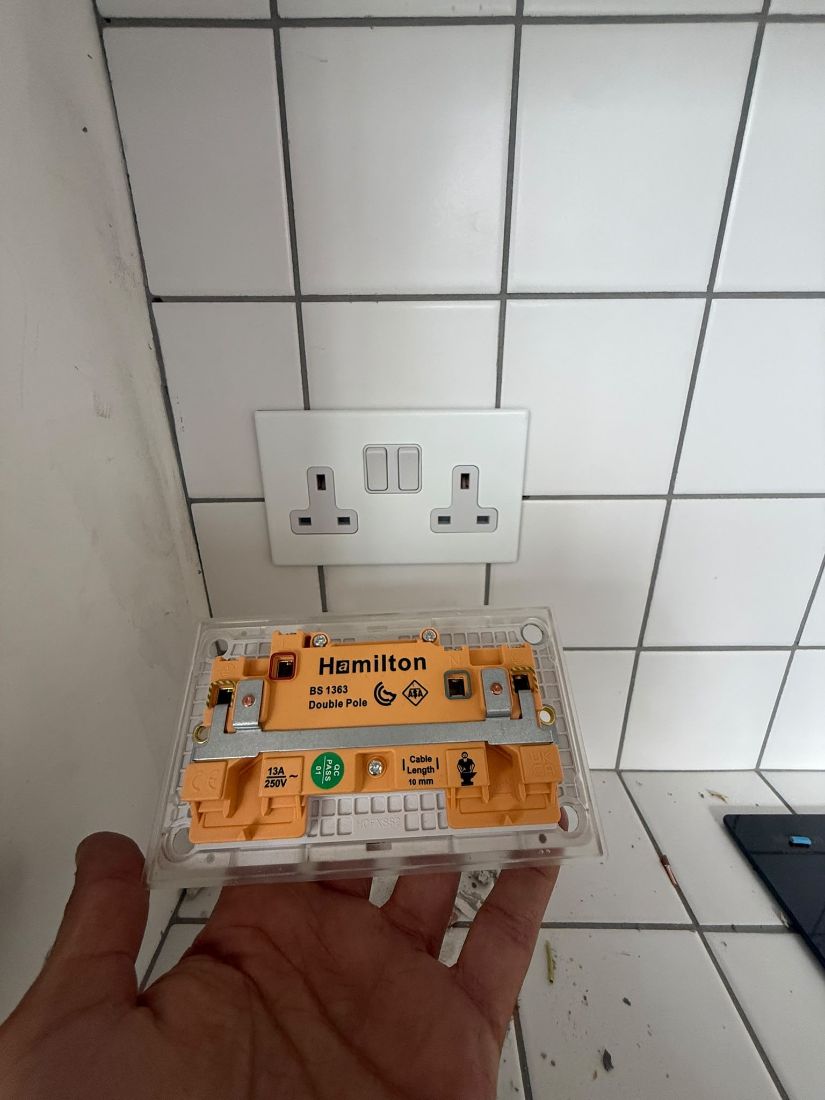
How much is an EICR in Manchester and what does it cover?
Our EICR costs £150 including VAT for a flat or house up to three bedrooms and £195 for four bedrooms or more. It takes two to three hours. We inspect the consumer unit, earthing and bonding, then test a sample of every circuit for insulation, continuity and RCD operation. You get a report the same day graded Satisfactory or Unsatisfactory, with each observation coded C1, C2, C3 or FI and explained.
- Visual inspection of the board, wiring, accessories and earthing
- Dead and live testing of every circuit
- RCD trip times recorded
- Each observation coded and explained in plain English
- Report emailed the same day to you and your agent
- Remedials quoted separately, fixed and re-certified within the 28 days if needed
EICR and certificate prices
Prices include labour, materials, testing, certificate and VAT. The written price is the price you pay unless you change the job.
What happens, start to certificate
Book a slot
Tell us the address and whether tenants are in. Two to three hours, we work round them.
Inspect and test
Board, earthing, bonding, then every circuit tested and RCDs tripped on the meter.
Report, same day
PDF to you and your agent, Satisfactory or Unsatisfactory, with every code explained.
Remedials, if any
Itemised price for C1, C2 and FI items. Fixed and re-certified well within the 28-day rule.
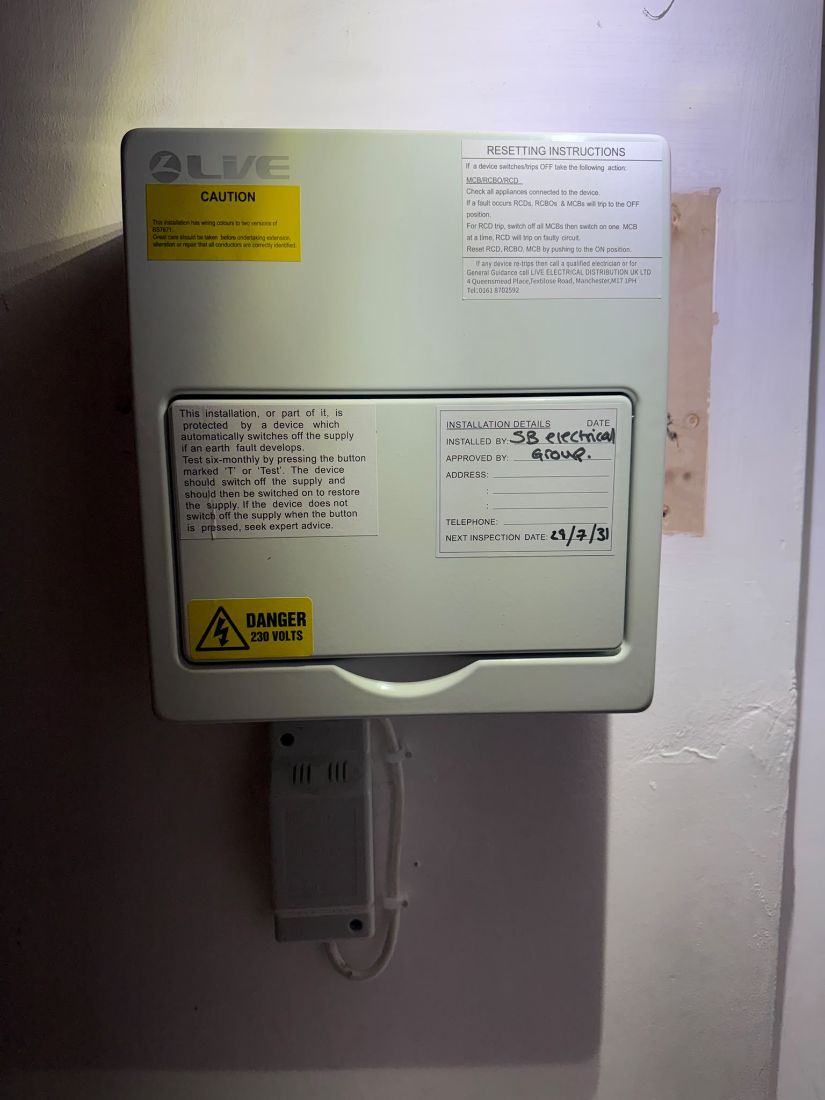
Landlord · Salford · Failed EICR
An unsatisfactory EICR put right in nine days
The report came back with C2 codes on an old plastic board and missing bonding to the gas. We priced the remedials the same day, fitted a new board, bonded gas and water and re-tested. The landlord had a Satisfactory report to the agent in nine days.
From our Google reviews“He was also very knowledgeable and explained everything clearly so I knew what was going on myself, I would highly recommend!!”
EICR questions
Not answered here? Ring 07703 295654 and ask an electrician.
Yes, in England since 2020. Private rented homes need a Satisfactory EICR at least every five years, a copy to tenants within 28 days and to the council on request. Fines run to £30,000. Equivalent rules for social housing began to take effect from December 2025.
C1 is danger present, fixed on the day. C2 is potentially dangerous and must be fixed for the report to be Satisfactory. C3 is improvement recommended and does not fail the report. FI means further investigation is needed.
Only if you ask us to. The report and the remedials are priced separately so you can take the report elsewhere. Most landlords ask us because we are already there and know the property.
It is not a legal requirement, but it is recommended every ten years, when buying a house, or before major work. Some insurers ask for one on older properties.
Usually the same week across Greater Manchester and Cheshire East. If a tenancy is about to start, ask for a next-day slot and we will do our best to fit it in.
Received. We will ring you today.
Usually within a couple of hours. Need us sooner? Call 07703 295654.
Book an EICR
An electrician reads it and rings you back the same day. No obligation.
 Quicker? WhatsApp us a photo →Our WhatsApp is run by SB Electrical Group, the team behind Mister Electrics.